What Is a Ground Stop?
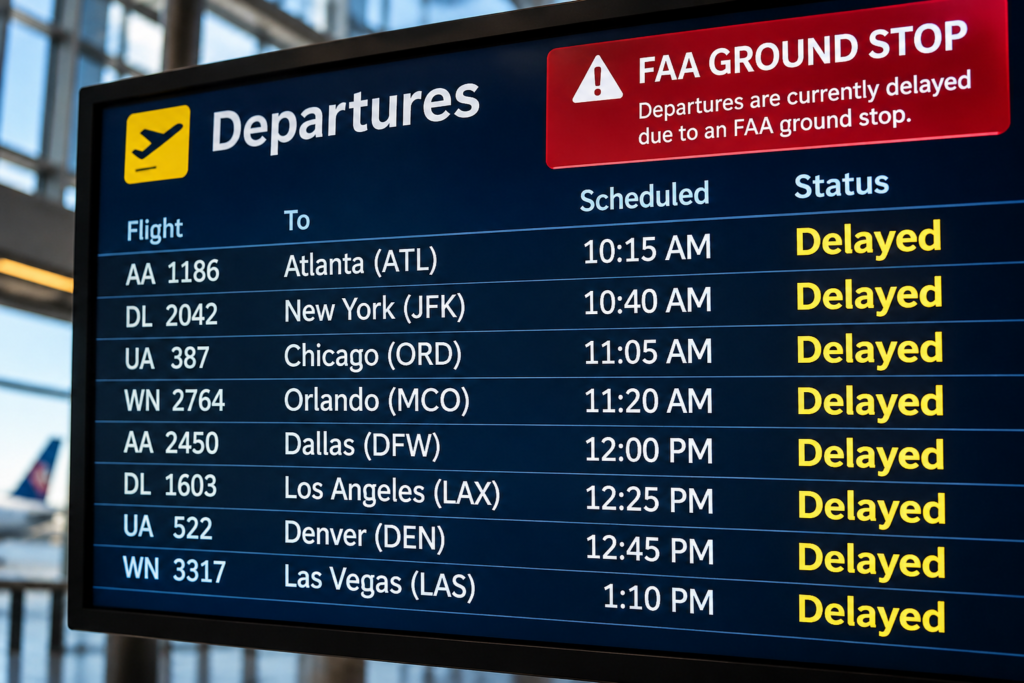
UPDATE: The ground stop on 11/13/2026 was lifted as of 8:15pm CT but it will still take days to completely reset the system.
Here is the original post:
As we write this blog post, all U.S. airports are under a nationwide FAA-issued ground stop. There is a lot of misinformation that typically gets spread in situations like this, so we wanted to help alleviate some of that with some facts and some helpful tips.
Defining “Ground Stop”
A ground stop is a temporary air traffic control measure that prevents aircraft from departing from a specific airport or airspace.
Ground stops are issued through the Federal Aviation Administration’s (FAA) air traffic system to keep air traffic safe and manageable when conditions make it difficult or impossible to accommodate additional arriving aircraft. For example, ground stops may be put into place because of weather, equipment failures (believed to be the cause of today’s problems), security issues, low staffing, or even airspace becoming too crowded.
It is important to understand that a ground stop doesn’t necessarily mean that ALL flights have stopped operating. Flights currently in the air must land, although they may be diverted. Some flights may also be allowed to depart. For example, certain flights to international destinations may be allowed to take off while all domestic flights remain grounded.
The FAA can limit a ground stop to certain departure airports, geographic regions, or flight types.
The bottom line: Ground stops are typically implemented out of an abundance of caution to maintain safe airspace.
What Happens to Flights During a Ground Stop
The impact depends on where your aircraft is located and where it’s headed.
If your flight hasn’t departed: Your aircraft may be required to remain at its departure airport, even if the weather is beautiful where you are. That’s because the problem may be hundreds or even thousands of miles away at your destination. PRO TIP: If your flight is delayed, don’t leave the airport; we recommend staying near the gate area and monitoring your status. In some instances, a flight that is listed as delayed can suddenly return to being “on time.”
If you’re already on the aircraft: You may find yourself waiting at the gate or, in some circumstances, on a taxiway while the airline and air traffic control determine when your flight can depart. Airlines must still comply with applicable federal tarmac delay rules.
If your flight is already airborne: A ground stop generally applies to aircraft that haven’t departed yet. Flights already in the air may continue toward their destination, receive holding instructions, or be diverted if conditions require it.
If you’re connecting to another flight: Even a relatively short ground stop can create problems for connecting passengers. A delay on your first flight may mean missing your connection, particularly when traveling through a busy hub airport.
How Long Does a Ground Stop Last?
Sadly, there’s no set answer. It may last a few minutes, but ground stops may also extend for several hours.
When a ground stop is issued, the FAA will typically provide an estimated end time, but it is critical to understand that this is an estimate, not a guarantee. A ground stop can be extended, modified, or canceled as conditions change. It is also important to note that even when the ground stop is lifted, your plane may not depart immediately or at all.
What Does This Mean for My Flight?
This is the million-dollar question. Until a ground stop is lifted, it is impossible to answer this question.
Airlines can provide estimates and sometimes confirm cancellations while a ground stop remains in effect, but the situation can change quickly.
Understanding the Restart
Even after a ground stop ends, the ripple effect continues across the worldwide flight system.
Even if a ground stop is localized to a single airport or airline, the pause can affect flights to and from other destinations. This is why you often see delays when the weather is beautiful at your departure airport.
Here’s an example of the ripple effect:
An airplane typically flies point to point, not always roundtrip. So on a given day, an aircraft might start the morning in Houston, fly to Nashville, then to Newark, then to Miami, then back to Houston. If any flight in that sequence gets delayed, it is possible that the rest of the day’s flights will also be delayed. And if one is canceled, the airplane and its crew are now “out of position,” and that will not only affect the remaining flights, but also that plane’s planned routes for the next day and perhaps even more.
This is why when a ground stop is lifted, things do not immediately go back to normal. It can take hours, even days, for the planes and crews to get back into “position” to resume a normal schedule. It is also worth noting that crews may not be able to work all types of airplanes, further complicating the situation.
Flight crews also have an FAA-mandated maximum number of hours they can work. If they “time-out” during a day, they cannot complete any additional flights. That means they are stuck “out of position,” and unless a different crew can be found, that flight will be canceled. This is also why you sometimes see delays announced the night before an early morning flight. The crew scheduled to fly that aircraft arrived later than anticipated the evening before and must have the mandatory number of hours off before resuming work.
Travel Insurance Can Help
Travel insurance may provide benefits when flight disruptions interfere with your plans, but coverage depends on the policy and the reason for the delay. Some policies include travel delay benefits that may reimburse eligible expenses such as meals, accommodations, or transportation after a covered delay reaches a specified duration. Other policies may offer missed connection or trip interruption benefits when applicable conditions are met. However, not every ground stop automatically qualifies for reimbursement. Policy exclusions, required documentation, and minimum delay periods matter.
Ground stops are just one of many reasons we recommend you carry travel insurance, regardless of your travel type or destination.
Can I Get a Refund?
If your flight is canceled or significantly delayed, and you choose not to travel or accept alternative transportation, you may be entitled to a refund under U.S. Department of Transportation rules. This applies even when the disruption is outside the airline’s control. However, if you choose to take a rebooked flight, you generally won’t also receive a refund for the original ticket.
A Helpful Resource
We have a special page on our website that monitors flight delays by airport, airline, destination, etc. You can access that page here.
Our Recommendation
This is primarily for the current outage (Friday 11/13/2026) but is good advice at any time. If your travel isn’t urgent, consider postponing your trip for a day or two, particularly if your airline has issued a travel waiver allowing changes without additional fees. Before making any changes, review your airline’s rebooking and refund policies. In some circumstances, waiting for the airline to cancel your flight may provide additional options.
You may also have difficulty finding hotel rooms or rental cars during times like this.
We also recommend not calling the airline unless necessary. The wait times will be very long, so if you can manage your booking and change your flights on their website or via their mobile app, that is the best alternative.