FACTS: Hantavirus & Norovirus
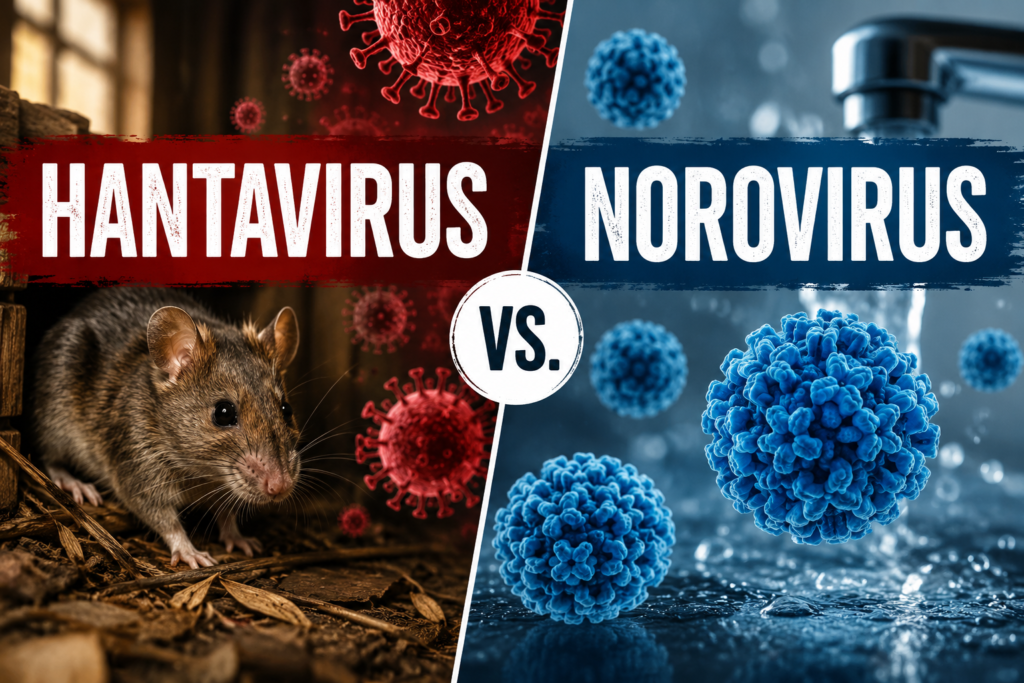
All of us at Premier Custom Travel were saddened to learn about a deadly Hantavirus outbreak on a cruise ship in the Atlantic Ocean, first reported on May 2, 2026. Our thoughts and prayers are with all the passengers and crew, and particularly the families of those who lost their lives to this virus. We are also aware of a Norovirus outbreak on a passenger ship in the Caribbean. Sadly, the amount of misinformation that is being spread and the confusion that it is causing is doing damage to an industry that we proudly support. To that end, we wanted to share some FACTS about both incidents and their causes so that we all might be better educated when we speak on these topics.
THE HANTAVIRUS
Here is an overview of the Hantavirus from the Centers for Disease Control and Prevention (CDC.gov):
Hantaviruses can infect and cause serious disease in people worldwide. People get hantavirus from contact with rodents like rats and mice, especially when exposed to their urine, droppings, and saliva. It can also spread through a bite or scratch by a rodent, but this is rare.
Hantaviruses cause two syndromes. Hantaviruses found in the Western Hemisphere, including here in the United States, can cause hantavirus pulmonary syndrome (HPS). The most common hantavirus that causes HPS in the United States is spread by the deer mouse.
Hemorrhagic fever with renal syndrome (HFRS) is a group of clinically similar illnesses caused by hantaviruses found mostly in Europe and Asia. However, Seoul virus, a type of hantavirus that causes HFRS, is found worldwide, including in the United States.
The key points we want to emphasize (also from the CDC website):
- Hantaviruses are a family of viruses which can cause serious illnesses and death.
- These viruses cause diseases like hantavirus pulmonary syndrome (HPS) and hemorrhagic fever with renal syndrome (HFRS).
- They are spread mainly by rodents.
- The Andes virus is the only type of hantavirus that is known to spread person-to-person. This spread is usually limited to people who have close contact with the ill person.
Here is the risk assessment from the CDC:
- At this time, the overall risk to the American public and travelers remains extremely low.
- Current assessments show no sign of increased risk for people who are traveling.
- Routine travel can continue as normal.
BY THE NUMBERS:
Number of confirmed Hantavirus cases onboard the aforementioned ship: 6
Number of Hantavirus outbreaks on cruise ships in 2026: 1
Number of Hantavirus cases worldwide in 2025 (according to the WHO): Between 10,000 and 100,000
Statistically, you have a .001% chance of contracting Hantavirus at sea, based on the number of cases this year (6) and the median of the worldwide cases in 2025 (55,000).
The key takeaway here is that this virus, unlike COVID-19 or even the Norovirus, does not easily spread between humans and the risk to travelers, to quote the CDC, is “extremely low.”
THE NOROVIRUS
Here is an overview of the Norovirus from the CDC website:
Norovirus is a very contagious virus that causes vomiting and diarrhea.
It is sometimes called the “stomach flu” or the “stomach bug.” However, norovirus illness is not related to the flu. The flu is caused by the influenza virus. Norovirus causes acute gastroenteritis, an inflammation of the stomach or intestines.
Most people with norovirus illness get better within 1 to 3 days; but they can still spread the virus for a few days after.
Some key points to consider from the CDC:
- Norovirus is the leading cause of vomiting and diarrhea from acute gastroenteritis among people of all ages in the United States.
- Each year, there are about 2,500 reported norovirus outbreaks in the United States.
- Norovirus causes 58% of foodborne illnesses acquired in the United States.
BY THE NUMBERS:
Number of Norovirus outbreaks on cruise ships in 2025: 18 (Source: CDC)
Number of Norovirus outbreaks elsewhere in 2025: Approximately 2500
Statistically, you have a .072% chance of contracting Norovirus at sea. This is why those who call it the “cruise ship disease” are factually wrong. All cruise ships are required to report an outbreak, while land-based venues are not required to do so.
It is also important to understand what constitutes an “outbreak” on a cruise ship. According to the CDC, an outbreak is defined as any time 3% or more of passengers or crew report symptoms of GI illness to the ship’s medical staff during a voyage. Some cruise lines have ships with as few as 100 or less passengers (plus around 50-90 crew), meaning that an “outbreak” could be declared with as few as six people reporting illness.
OUR SUGGESTED TAKEAWAY
Everything mentioned above is factual data from the CDC and not the opinion of Premier Custom Travel or any of our team. What follows below is our own takeaway and not that of the CDC or outside parties.
While any illness (or death) at sea is tragic, these situations, as the data validates out above, are extremely rare. You are extremely more likely to be affected by either of these viruses on land than you are at sea. To call either of them a “cruise ship disease” or infer that they are more likely to occur there is simply false and misleading.
At Premier Custom Travel, we believe that facts are important and headlines should be accurate, not misleading or sensational in an effort to get clicks. We urge both the media and the general public to take the time to research the facts before sharing or commenting on these topics. Share the facts, whatever they may be, and let’s leave the hyperbole for other topics.